
Alchemist | Author/Screenwriter | Storyteller | Mentor | Dog Dad | Journeyer |
Mark David Gerson
However, once I managed all that, the process turned out to be considerably more rewarding than I expected it to be. Surprising, too. As I have revisited each of these titles, rereading quotes that I saved all those years ago and excerpts that I found online and in library copies, I haven’t so much been transported back in time as those ten books have reinserted themselves into my life as it is now. Each book, I have been amazed to discover, is as relevant to me today — if in new and deeper ways — than it was three decades ago.
Books have always been important to me, and not only because I’m a writer. They have served first as windows into new worlds, then as the passports that allowed me entry into those worlds. Thirty years ago, that was true for the books on my list. In its own way, each gave me permission to look within in ways I had never before dared do and each offered me a key into inner worlds beyond anything I could ever have consciously imagined. Today, I find threads in all those books that connect what I was then only discovering with who I have become, with what I now write and teach, and with the journey that got me here. It’s a revelation that is as validating and affirming as it is astounding. And gratifying. And it gives me hope that my books will do the same for others in the years to come.

MARK DAVID GERSON is the award-winning author of more than a dozen books whose readers span the globe – books that include spellbinding fiction, critically acclaimed personal development and self-help guides, compelling memoirs and titles for writers that are now considered classics in the field. Mark David is also an accomplished screenwriter, and his screenplay adaptations of his Legend of Q’ntana fantasy novels are on their way to theaters as a series of epic feature films.
As a coach, counselor and mentor, Mark David brings the same empowering principles and common sense philosophy that underlie all his writing into his private sessions. Working as a writing coach and creativity catalyst, he helps novice and veteran writers alike unleash the power of their creative potential and get their stories onto the page and into the world with ease. And as a spiritual and personal counselor, he motivates clients from all walks of life to foster their intuition, connect with their innate inner wisdom and live more purpose-filled lives.
Mark David Gerson electrifies groups and individuals around the world with his inspiring stories and motivational talks, seminars, workshops and retreats. He is also a highly sought-after speaker, media guest and editorial consultant. | https://www.markdavidgerson.com
My 10 Best
Fire in the Earth
by David Whyte
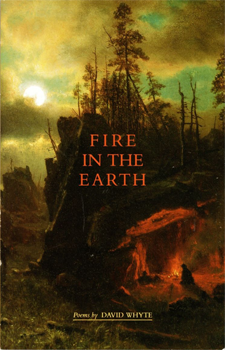
I don’t remember how I discovered David Whyte. What I do remember is that my first experience of him was at a combined talk/literary reading that he presented in a sterile classroom at the University of Toronto’s Ontario Institute for Studies in Education back in the early 1990s. It was a public event and someone must have recommended it to me, because as much as I respect poets and poetry, I had read little of it to that point…other, of course, than what might have been required in English class. Yet when Whyte read the first of his poems, from Fire in the Earth, then his newest collection, I was gobsmacked. There’s no other word for it. It was in the early days of my spiritual awakening, and it was as though every word he read had been written for me alone. The power and passion of both his presence and his poetry spoke not only to my still-nascent spirituality but to the open-hearted vulnerability that I yearned to achieve with my writing. I carried that book with me for many years, even after ridding myself of nearly all my books (and possessions) a few years later in the first of my many pilgrimages.
Dream Work
by Mary Oliver
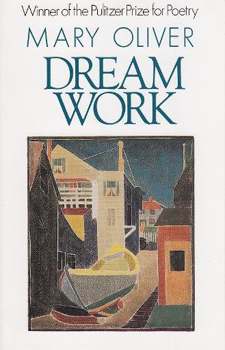
One of the poems David Whyte featured at his Toronto event (see Fire in the Earth), was Mary Oliver’s “The Journey.” I hadn’t heard of Oliver at that point, but when Whyte read the poem’s opening lines, I was hooked. At a time when I was still exploring my spirituality and when my outer life was beginning to shift nearly as radically as my inner life already was doing, these words were profoundly validating: “One day you finally knew / what you had to do, and began, / though the voices around you / kept shouting / their bad advice—” The next day, I picked up a copy of Dream Work and devoured it… at least as quickly as it was possible to devour poetry of that depth. Along with “The Journey,” Dream Work gave me permission to be all that I was discovering myself to be. All these years later, that poem and that collection continue to do just that.
A Wrinkle in Time
by Madeleine L’Engle
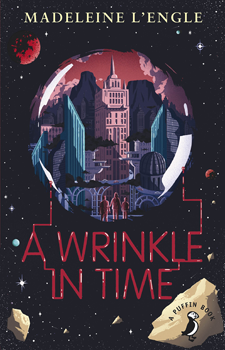
Most people who read young adult fiction do it when they’re in their teens. Not me! At least not in the fantasy genre. In fact, ironically for someone who ended up writing fantasy, I never read much of it until I discovered YA authors like Madeleine L’Engle, Ursula K. Le Guin, Michael Ende, Welwyn Wilton Katz and O.R. Melling. But L’Engle’s A Wrinkle in Time was the first. Like L’Engle’s teenaged protagonists, I was grappling with issues of faith and trust, opening for the first time to a sense of greater purpose, reorienting my life from one focused on mind/intellect to the numinous power of the heart and struggling against conformity (even spiritual conformity). As such, Wrinkle was profoundly inspiring and became the perfect metaphor for my own journey. Moreover, that the now-classic book was rejected 26 times over two years, including by L’Engle’s own publisher, was and remains a potent lesson in perseverance, one that I often refer to in my books and talks.
Letters to a Young Poet
by Rainer Maria Rilke
I was awakening to my creativity as well as to my spirituality when I happened upon this slender classic, and it couldn’t have been more timely. Rilke’s advice to the 19-year-old Austrian officer cadet who was experiencing his own creative blossoming could have been written for me. Guidance about trusting one’s “innermost awareness” above all else, about embracing solitude, about surrendering to one’s authenticity, emotional depth and personal transformation…all these would inspire anyone on any kind of spiritual journey. They certainly inspired me! That they were written to a young poet added to their resonance for a 38-year-old who was also on a journey of deepening creativity.
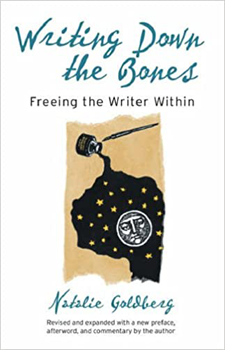
Writing Down the Bones: Freeing the Writer Within by Natalie Goldberg
If any single book influenced my spiritual approach to writing and creativity, it would have to be Natalie Goldberg’s Writing Down the Bones. Her Buddhist philosophy was, for me, the perfect marriage of creativity and spirituality at a time when I was still opening to both. For Goldberg, writing is a “practice,” like meditation is a practice — less about outcomes than about process, less about a completed work than about the journey that gets you there. For someone like me, who had been creatively blocked for years, that was hugely liberating. It freed me to focus on the word of the moment instead of allowing my self-doubt to project me toward an endpoint I worried I could never reach. And it became one of the cornerstones not only of how I write but of how I mentor and teach — non-writers as well as writers.
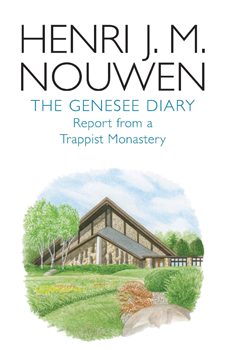
The Genesee Diary: Report from a Trappist Monastery by Henri J.M. Nouwen
I was on a week’s retreat at Nova Nada, a Carmelite monastery deep in the Nova Scotia interior, when I found The Genesee Diary in the monastery library. It’s a deeply personal account of Nouwen’s considerably more intensive retreat — his lasted seven months — in which the Dutch-born priest holds little back, openly and unapologetically sharing his struggles with loneliness, rejection, anger, despair, self-doubt, fear and perceived failure…issues shared by many spiritual journeyers, including me. Yet for all I identified with many of Nouwen’s challenges, it was his willingness to chronicle them so vulnerably that was his greatest gift to me as writer and mentor. It was from Nouwen that I first discovered the transformative power of vulnerability and the transcendent power of authentic storytelling — for both storytellers and their readers and audiences.
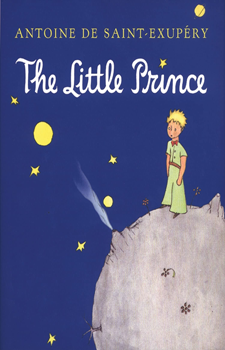
The Little Prince
by Antoine de Saint-Exupéry
As a storyteller myself, some of my most powerful and enduring inspiration has derived from others’ stories and parables. And there are few tales that have been more uplifting for me than Saint-Exupéry’s The Little Prince, proving, as I discovered when I reread it as an adult, that the simplicity of a fable written for children can far surpass in spiritual impact anything written for so-called grownups.
Here is a profound story that with childlike innocence reminds us that only the heart is wise… that what is most essential is invisible to the eye… that the greatest creations, like seeds, begin life deep in the hidden depths of the earth’s darkness… that most adults rush from one place to the next, never satisfied with where they are, with little awareness of where they’re going and always seeking to save time to no known purpose… that children are the only ones who bother to look out the window… that creativity is at least as important as “geography, history, arithmetic and grammar.” What else could one possibly look for in a book of spiritual inspiration!?

A Circle of Quiet
by Madeleine L’Engle
Whenever I’m asked which author, living or dead, I would want to meet over dinner, I always pick Madeleine L’Engle. Although her spirituality was shaped by her Episcopal faith and mine is considerably broader, her work has not only touched me deeply, it has profoundly influenced how I live and write.
I didn’t at first realize that there was more to L’Engle than her five Wrinkle in Time titles, but as soon I discovered that there was, I gobbled up as many of her books as I could. My first — and my first introduction to L’Engle’s life and faith — was her Circle of Quiet memoir. As radically different as her life was from mine, at least on the surface, I was astounded by the parallels in our spiritual outlook and by how that sometimes unorthodox outlook informed a similar approach to the creative process. At the same time, the book — all her books, in fact — challenged me to go deeper, to trust more unconditionally and to surrender more absolutely, in both my spiritual and creative life. Perhaps most important of all, though, it challenged me to more fully embrace my humanity.
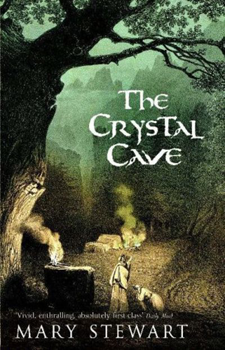
The Crystal Cave
by Mary Stewart
I may have been in my late 30s when I read this first book in Stewart’s Arthurian series, but I identified strongly with this tale of a young outsider with uncertain parentage who is shunned for his unique gifts and special abilities. That outsider in Stewart’s telling is Merlin, still a youth and still growing into an awareness of his wisdom and visionary power.
As I followed the story of Merlin’s coming-of-age, I couldn’t help but see myself in his journey. Barely a year into the radically life-changing odyssey that was my spiritual awakening (and with uncertain parentage of my own), I, too, was being pushed and prodded into acknowledging and embracing inner realms that, only months earlier, I would have dismissed as New Age nonsense. Yet, like the young Merlin, here I was experiencing me for the first time…and, for the first time, being okay with it.

Journal of a Solitude
by May Sarton
If you’ve read my other recommendations, you’ll have noticed that, with the possible exception of Natalie Goldberg’s Writing Down the Bones, none is from a “spiritual teacher” offering guidelines for living a spiritual life. Rather, they are mostly poetry, fiction and memoir — stories told by storytellers, stories often drawn from deeply personal experiences. That’s because, for me, honest, vulnerable storytelling offers the most uplifting examples for my own life. It’s also, largely, how I choose to inspire others.
May Sarton’s Journal of a Solitude falls easily into that same category and, like, Henri Nouwen’s Genesee Diary, was a book I discovered while on retreat at Nova Nada. Also like Genesee Diary, it delves frankly into the very human and sometimes frightening issues encountered by those at any stage of a spiritual journey, issues like isolation, self-doubt, failure, letting go, loss of faith. Added to that, and of particular resonance to me, now as much as then, are Sarton’s reflections on the challenges of a creative journey traveled largely in solitude.