
Journalist | Author | Filmmaker | Director |
Bill Bennett
When I was a youngster, eight or nine years old, after my mother tucked my brother and me up in bed and turned out the light for us to sleep, I’d grab a torch that I’d hidden under the bed and read under the covers for an hour or two.
When I was twelve, I got glandular fever and was confined to bed for a couple of months. I used that time to write a book. Or at least, I began to write a book. I asked my mother to get me some pencils and an All Day Jotter, which was basically a big notepad. I wrote for several hours each day.
Little did I know then that I would end up making my living from writing – screenplays and novels and non-fiction books.
All my life I’ve read voraciously. I’m a slow reader – maybe 30-40 books a year. And they range from crime fiction to esoteric literature. I simply love reading – and I don’t go anywhere without my Kindle. I have nearly one thousand books on my Kindle.
To write, you have to read.
BILL BENNETT studied Journalism at the University of Queensland before joining the ABC as a journalist. He moved into documentaries and stayed with the ABC for twelve years before going freelance as a documentary filmmaker. During this time he won two Logies, (Australia’s equivalent of the Emmy) for Television Reporter of the Year, and Most Outstanding Television Documentary of the Year.
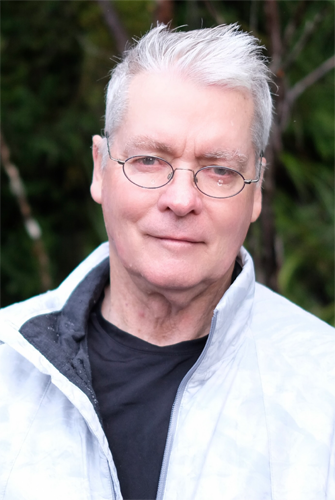
He then moved into feature films. He’s made seventeen feature films as writer, producer and director. He’s won Australian Film Institute Awards (Australia’s equivalent of the Oscar) for Best Film and Best Director and been nominated a further twelve times. He’s had two films in Official Selection at the Cannes Film Festival and four films selected for the Toronto Film Festival.
In 2024 his movie The Way, My Way became the third highest grossing Australian film of the year. It was based on his best-selling Camino memoir of the same name. In 2025 the Spanish Government awarded Bill the 8th annual Malaspina Award for his outstanding contribution to furthering cultural ties between Australia and Spain through his book and film, The Way, My Way.
As an author, Penguin Random House has published his YA supernatural thriller trilogy, Palace of Fires.
My 10 Best
(in no particular order)
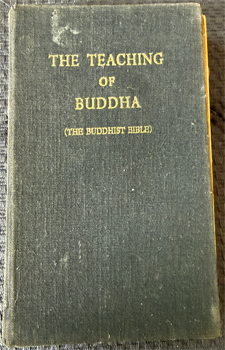
The Teaching of Buddha
by The Buddhist Bible
When I was seventeen my parents took me to Japan. On my first night in Tokyo, I opened up the drawer in my hotel room’s bedside table and there I found a little black book. It was the Japanese equivalent of Gideon’s Bible, except it was about Buddhism. That night I read the book almost cover to cover – then the next morning I went down into the hotel lobby and bought my own copy. That book changed my life.
I was raised as an Anglican Christian, but Buddhism made so much more sense to me – and this little black book laid it out so simply. When I returned home I furthered my learning of Buddhism and for many years considered becoming a monk. Seriously! Ultimately I rejected Buddhism for one salient reason – detachment from emotion meant, for me, detachment from love – love being the ultimate attachment. According to Buddhist doctrine as I interpreted it, to love someone was to open yourself to suffering. I was prepared to suffer for love. And so I began to look further afield for meaning.
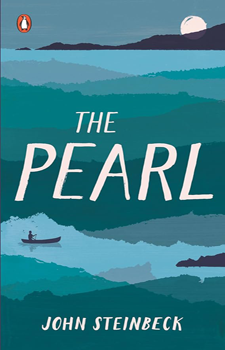
The Pearl
by John Steinbeck
I’ve chosen The Pearl of all Steinbeck’s work that I read in my teens and early 20’s, mainly because it’s a novella and a gem of a book, as is To A God Unknown. I tried in my later years to acquire the film rights to The Pearl to make it into a movie, but they’d already been licensed. So I made instead my Australian version, called “The Nugget,” starring Eric Bana. The film is now regarded as an Aussie classic.
The Pearl is once again a simple story of how greed can change a man’s soul, and how it can wreak havoc and tragedy. For me it’s like Hemingway’s The Old Man and the Sea – an almost perfect book. Steinbeck’s work, including Sweet Thursday and The Grapes of Wrath fostered in me a deep kinship with humanism tinged though with a deeper subtext of fate, destiny and the unknowable.
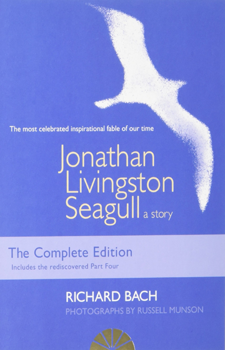
Jonathan Livingston Seagull
by Richard Bach
The same year I read the Buddhist Bible, I also read Jonathan Livingston Seagull. I was seventeen and I didn’t have the maturity of thought at that age to see it for what it truly was – a simple tale “trojan-horsing” a complex spiritual work. All I knew was that the book connected with me on a deep level, and it was only years later when I re-read it that I realised what a clever metaphor the book really was.

The Illustrated Man
by Ray Bradbury
Skipping back in time some four or five years, I was twelve or thirteen when I picked up a dog-eared copy of The Illustrated Man, written by Ray Bradbury. I was on holidays on the Gold Coast at Mermaid Beach in Queensland, it was winter, and I remember hunkering down and reading Bradbury’s wild collection of short stories and being deeply affected. He took me to other lands, other places, other times, and he triggered in me perhaps the most important faculty a person seeking spiritual awakening must have – an imagination. I subsequently read pretty much all of Bradbury’s work, and his writing fostered in me a fascination for, and belief in, other dimensions. Something Wicked This Way Comes kept me awake at nights for years!
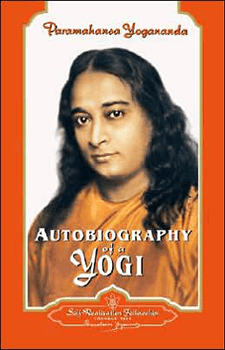
Autobiography of a Yogi
by Paramahansa Yogananda
I really can’t remember when I first read Autobiography of a Yogi. I was in my early 20’s, and I wasn’t fully ready for it. It was only when I hit my middle years that I re-read it and I got it. And then it took the top of my head off.
It didn’t really surprise me to find out later that it was Steve Jobs’ favourite book, and that in fact he posthumously gave a copy to everyone who attended his memorial. Jobs said in several interviews prior to his death that he read the book every year.
Jobs aligned very much with Yogananda’s emphasis on self‑realization and his belief that the power of intuition overrode pure intellect when it came to breakthrough creativity.
Intuition has become very much the focus of my later years, and this book by Yogananda was perhaps the first step along that path.
From Intellect to Intuition
by Alice Bailey
Alice Bailey is hard work! I don’t find her writing easy, by any means, but man o man was she able to express esoteric stuff in a way that no one before or since has been able to match.
In From Intellect to Intuition, she posits that humankind has to move from Instinct through Intellect to Intuition to find a truth in inspiration that would otherwise be fragmented if left to the intellect alone.
Alice Bailey’s The Consciousness of the Atom and The Light of the Soul are dense works, but worth pushing through. Her books were all channelled, which explains the complexity of thought – see Paul Selig’s work next – and just like with Paul and Lee Carroll (who channels Kryon) I trust the veracity of their material.
I found Alice Bailey’s work while I was researching my film on intuition called “PGS – Intuition is your Personal Guidance System.” Making that film introduced me to Paul Selig and Lee Carroll – two people who channel Spirit in a manner that leaves me in no doubt there is a Higher Power and a Home beyond The Veil.
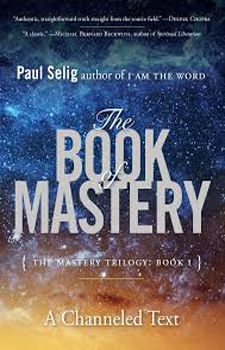
The Book of Mastery
by Paul Selig
The Book of Mastery is the 4th book “written” by Paul Selig. In fact Paul doesn’t claim authorship of the 15 books he’s written. He gives full credit to what he calls his “Guides,” who channel the books through him.
I was nearing completion of the shooting of my film on intuition and came across The Book of Mastery by chance while I was researching channelling. I read the book immediately and it spoke to me very powerfully. I then went back to Book #1, I Am The Word – read that, then read all the other books he and the Guides had written to that point – six in all.
I knew I had to meet Paul and interview him as part of the film, so my partner Jennfer and I flew to New York, did the interview – and a friendship grew.
I’ve since seen Paul channel live, in front of large audiences – in which he delivers highly sophisticated intellectually complex monologues that run about 40 minutes. There’s no fakery in this – and there’s no memorizing from a learned script. Jennifer and I are highly experienced dramatists – we know when a performance is real and when it’s not. What Paul says in these channellings comes from somewhere else.
Paul Selig’s work in these books, as a channel for The Guides, has fundamentally changed the way I look at the world. The same can be said of Lee Carroll, who channels the collective entity known as Kryon.
I’m no sucker. After studying but not completing a medical degree, I trained with the Australian Broadcasting Commission as a journalist. I spent 12 years as a journalist, segueing from news to current affairs, to documentaries, then to feature films. I approached the intuition film with a healthy and respectful scepticism of anything that smelt “woo woo.”
And I know that Paul and Lee, and a select few others, are the real deal. What I have learned from both of them is that I am a spark of God, along with everyone and everything on this planet – or to put it another way, I am an aspect of the Creator manifested in form.
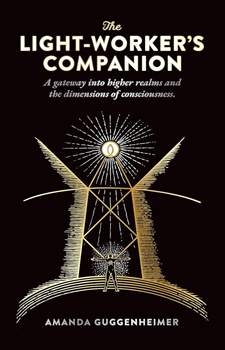
The Light Workers Companion
by Amanda Guggenheimer
Amanda Guggenheimer is a shy reclusive author who, once again, publishes works that are channelled. Her material though comes from St Germain and other Ascended Masters.
I came across The Light Workers Companion again while researching my film on intuition. I tracked Amanda down and interviewed her for the film – and have maintained a friendship since.
I’ve learned so much from Amanda’s work – in particular the concept of the spiritual hierarchy. There are illustrations in this book that help your understanding of the concepts – but Amanda’s book has been an essential step along my path to understanding the true nature of reality.

Life Between Lives
by Michael Newton
I’d read Michael Newton’s previous book, Journey of Souls, about the process of death and reincarnation, but Life Between Lives had a greater impact because it details a model of the afterlife: death transition, meeting spirit guides, rejoining soul groups, life review with a council of wise beings, planning future lives, and understanding one’s soul level and purpose.
I was researching a novel that centered around reincarnation and that’s what brought me to Michael Newton – and along with the work of Dolores Cannon it resonated with me, and filled in a number of the gaps I had in my understanding of how things work. It all made complete sense to me – backed up by scientific rigor.

The Kybalion
by William Walter Atkinson
Again, I came to this book quite late into my spiritual development. Had I encountered it earlier, I would have dismissed it as whacky occultism.
But when I read it, so much resonated with me. The heart of the book are the Seven Hermetic Principles, or Universal Laws. Each is very powerful, but the one that stuck with me most profoundly was the principle of Polarity. That each state is merely a continuum of the whole.
It states that Spirit and Matter are two poles but of the same thing – the intermediate phases are merely degrees of vibration. Where do you differentiate between hot and cold? Where do you find a division between love and hate. They are all part of a continuum. Same with East and West. If you travel west, where is the separating line to East. Travel far enough and you end up where you started – in the West. They are all part of the same.